
Snorkeling Gear for Beginners: What You Actually Need
, by Syndmart, 9 min reading time
, by Syndmart, 9 min reading time
Starting snorkeling? You need a good mask, a dry snorkel, and comfortable fins. Here's exactly what to look for as a beginner so you can get in the water with confidence.
Starting snorkeling? The good news is you don't need a ton of expensive stuff. The real key is getting the right fit and understanding what each piece of gear does. Let's break down snorkeling gear for beginners so you can feel confident in the water and actually enjoy yourself.
In this article
Every beginner needs a mask, a snorkel, and fins. That's it. These three items are the foundation of a safe, comfortable snorkeling experience. Everything else is a bonus.
Let's talk about each one and what makes them work for you as a beginner.
Your mask is literally how you see underwater. If it doesn't fit right, water leaks in, you get frustrated, and you're done. So this matters.
A good beginner mask needs a strong, even seal around your face. The best way to test this is to hold it against your face (without the strap) and take a breath in through your nose. If it stays attached without using your hands, that's the one. If it falls off, try the next one.
Look for masks made with soft silicone on the seal. Hard plastic feels uncomfortable and doesn't seal as well. The lens should also be clear and give you a wide view so you can see what's around you without turning your head constantly.
Avoid masks with tiny lenses or ones that sit too far from your face. These distort what you see and make snorkeling less fun.
Your snorkel is what lets you breathe while your face stays in the water. For beginners, this is huge because it means you don't have to hold your head up the whole time.
Dry snorkels are the best choice for new snorkelers. These have a special valve at the top that keeps water out when a wave splashes over you, and a purge valve at the bottom so you can clear any water that gets in. This takes the stress out of learning.
Semi-dry snorkels are another solid option. They're a middle ground between basic and fully dry, and they work well for most people.
Skip the rigid snorkels if you're just starting. Flexible tubes are more forgiving and feel better in your mouth. Also check the clips and straps when comparing gear sets. You want something that attaches firmly to your mask but isn't so tight it pinches your face.
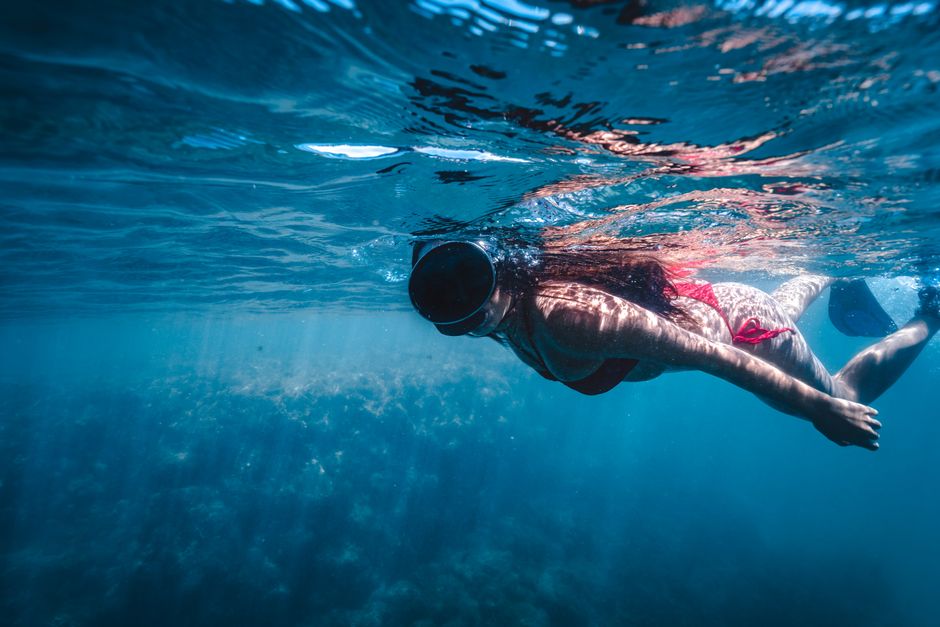
Fins help you move through water with less effort. For beginners, comfort matters more than speed. You're not training for the Olympics.
Your fins should fit snug but not painfully. If they're loose, they'll fall off. If they're too tight, your feet will cramp. The best way to know is to try them on and walk around in them for a minute.
Flexible fins are easier to use than stiff ones. They require less ankle strength and are easier on your legs if you're new to this. You'll still move fine, and you won't leave the water exhausted.
Some people like Mermaid One-Piece Swimming Fins For Children And Adults, which give a fun twist on standard fins while still being practical for beginners.
Before you even put on fins, your feet need protection. Reefs, rocks, and even sandy bottoms can hurt bare feet. Plus, the extra layer keeps your feet warm and comfortable.
Diving socks or water shoes with textured soles are perfect for this. The non-slip sole gives you grip on wet surfaces, and the padding protects your feet. Look for something with a 3mm rubber sole at minimum. It's thick enough to protect but thin enough that you won't feel clunky.
Options like 3mm Non-Slip Rubber Sole Diving Socks or Non Slip Water Shoes Socks with Quick Dry Textured Sole are solid picks for keeping your feet safe and comfortable.
Here's the thing: you can't know if gear fits right from a photo or description. You have to try it. This is non-negotiable.
If you're buying online, make sure the seller has a good return policy. That way if the mask leaks or the fins are uncomfortable, you can swap it out. At Syndmart, you get access to gear designed with beginners in mind, and returns are straightforward so you're not stuck with something that doesn't work.
Ready to shop?
Shop Now →Pro tip: wear the same kind of wetsuit or rash guard you'll wear while snorkeling when you're testing gear. Thick material changes how masks seal, so you want to test under realistic conditions.

If you're planning a cruise, beach vacation, or just trying snorkeling for the first time, a portable set is smart. You don't have to buy five separate items and figure out how to pack them. Everything fits together in one compact bag.
These sets come with a mask, snorkel, fins, and usually a storage bag. They're light, they travel well, and they save money compared to buying each piece separately. For a beginner, this is the easiest way to start.
When you're looking at different gear sets, pay attention to these things:
Don't get caught up in fancy colors or trendy designs. Function matters way more than looks when you're starting out.
The research backs this up: proper fit and comfort are essential for water safety, and that's doubly true for snorkeling gear.
If you can, visit a local shop and hold the gear in your hands. Feel the mask straps. Try the fins. Test how the snorkel feels in your mouth. All of this matters.
If you're ordering online, read reviews from other beginners. They'll tell you if the mask leaks, if the fins cause blisters, or if the snorkel is hard to breathe through. Real feedback from real beginners is gold.
You now know what to look for. The next step is finding gear that matches these criteria and fits your budget. Look for beginner-focused sets that emphasize comfort over advanced features. Your goal right now is to get comfortable breathing through a snorkel and moving through water with fins. Everything else is secondary.
Start with the three essentials: a good mask, a dry snorkel, and comfortable fins. Add diving socks or water shoes to protect your feet. That's your complete setup.
Once you've got your gear and you've tested the fit, you're ready to get in the water and start exploring. Have fun out there.
No, not necessarily. A wetsuit or rash guard helps keep you warm and protects your skin from sun and scrapes, but you can snorkel without one in warm water. If you're in cooler water or planning to stay in for hours, a thin wetsuit is smart. Start without one if you're just trying it out.
A dry snorkel has a valve at the top that seals when water splashes over it, keeping your tube completely dry. A semi-dry snorkel has a smaller valve or none at all, so it might let in a tiny bit of water. For beginners, dry is better because it's more forgiving. Semi-dry snorkels are great once you have more experience.
Put it on and take a breath in through your nose. If you feel air coming in around the edges, it's leaking. You can also do the dry test: hold it against your face without the strap and breathe in. If it stays put, the seal is good. If it falls off, it won't seal right underwater.
Mermaid-style fins are fun and they work, but traditional split fins are usually more comfortable for longer snorkeling sessions. If you love the look of mermaid fins and don't mind a bit of extra leg work, they're totally fine for beginners. Just make sure they fit snugly and the blade isn't too stiff.
Ready to shop?
Shop Now →
Starting snorkeling? You need a good mask, a dry snorkel, and comfortable fins. Here's exactly what to look for as a beginner so you can...
Snorkeling Gear for Beginners: What You Actually Need
A rash guard is one of the smartest additions to your water sports kit. Whether you're surfing, snorkeling, or just spending hours in the water,...
Wetsuit Rash Guard Guide: How to Choose & Use
Rocky beaches are tough on your feet. The right water shoes protect you from sharp rocks while staying comfortable in water. Here's what you need...
Water Shoes for Rocky Beaches: Complete Guide
Neoprene diving socks are a game-changer for anyone serious about cold water diving. They insulate your feet, prevent chafing, and layer perfectly under your fins.
Neoprene Socks for Diving: Why They Matter & How to Choose
