

Tennis Shoes: How to Choose the Right Pair for Your Game
, by Syndmart, 12 min reading time
, by Syndmart, 12 min reading time
Picking the right tennis shoes can totally change how you play. We'll walk you through exactly what to look for so you stay comfortable, injury-free, and competitive on the court.
Tennis shoes are way different from regular sneakers, and that matters. When you're moving side to side, stopping fast, and pivoting on the court, your feet need serious support and grip. The right pair keeps you stable, protects your ankles, and gives you the traction you need to move confidently. Let's break down what makes a tennis shoe actually work for your game.
In this article
Regular running shoes are built for forward motion. Tennis shoes? They're engineered for lateral movement, quick direction changes, and explosive stops. You need maximum stability on the sides of your feet, not just cushioning underneath.
The key difference is court-specific support. Tennis shoes have reinforced sides, a wider base, and extra grip on the sole to handle clay, hard courts, or grass. They're also more durable because tennis is tough on footwear. Your shoes take a beating, so they need to be built tough.
This is the number one thing to get right. When you're playing tennis, you're constantly shifting your weight and making sharp cuts. If your shoes don't have good lateral support, you're at risk for ankle injuries and just playing worse overall.
Look for shoes with:
The best way to test this? Walk around in the shoe and simulate a quick side-to-side movement. Your foot should feel locked in, not sliding around inside the shoe.
Your sole is your connection to the court. A good tennis shoe has a pattern that grips the surface without catching or dragging. You want to be able to move quickly but also plant your foot and change direction without slipping.
Different court types need slightly different traction patterns:
If you play on multiple surfaces, a versatile pattern is your friend. Don't just pick based on looks, even though cool designs are fun. Feel the sole and think about where you actually play most.
You're going to wear these shoes for hours at a time, sometimes multiple times a week. Comfort isn't optional. A tennis shoe that feels great when you first put it on but causes blisters after 30 minutes is a waste of money.
Here's what to check:
Pro tip: shop for tennis shoes later in the day when your feet are slightly swollen (they expand during activity). This gives you a realistic sense of how they'll feel during a match.

Tennis is hard on shoes. You're going to be putting stress on the toe box, the sides, and the sole constantly. Good tennis shoes use reinforced materials in high-wear areas.
Look for shoes with:
A quality pair of tennis shoes should last you a full season of regular play, sometimes longer if you rotate with another pair. That's why investing in the right shoe makes sense—you get real value out of it.
Your skill level and how often you play should influence your choice. Casual players who hit the court once a week have different needs than competitive players grinding daily.
If you're just starting out, don't overspend on shoes marketed for pros. Get something with solid fundamentals that fits well. As you play more and develop your game, you can upgrade to shoes engineered for your specific court and style.
New tennis shoes almost always need a break-in period. Wear them around the house for a few hours, then play a casual practice session or warm-up before you use them in a real match. This lets the materials soften up and helps you spot any uncomfortable areas before they become a problem on court.
If you notice pain or blistering after breaking them in properly, they're probably not the right fit. Some discomfort during break-in is normal, but actual pain is a red flag. Your feet and your performance depend on shoes that work for you, and Syndmart has plenty of options to explore as you narrow down what works best.
Ready to shop?
Shop Now →Research from sports medicine experts shows that proper footwear significantly reduces injury risk. A study published by the National Institutes of Health confirms that shoes engineered for lateral movement and stability reduce ankle and foot injuries in court sports.
When your shoes match your court and your foot type, you're protecting your joints and ligaments. That means fewer injuries, less pain, and more time actually playing the game you love.
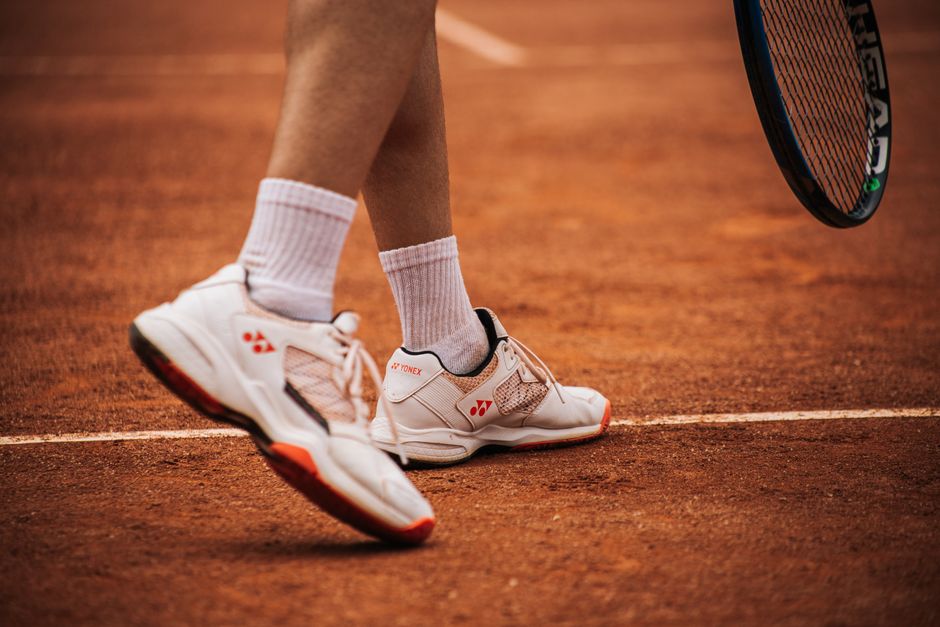
If you can, try shoes on in person at a specialty sports retailer. They can watch you move and give feedback on fit and support. If you're ordering online, make sure the return policy is solid so you can swap them out if they don't work.
When you try them on, wear the same socks you'd wear while playing. That makes a huge difference in how they fit. And don't just stand still, walk around, simulate lateral movements, and get a real sense of how the shoe feels during play.
Shopping for tennis shoes online is totally doable if you know your measurements and have tried similar brands before. Check the size charts carefully because different brands fit differently. Read reviews from other players with similar foot types and playing styles. They'll tell you if a shoe runs narrow, wide, small, or large.
When you find a shoe that seems right based on research and reviews, give it proper break-in time before your first match. You'll know pretty quick if it's a winner or if you need to try something else.
You don't need to spend a fortune on tennis shoes, but the cheapest option usually isn't worth it. Mid-range shoes from established brands offer solid support, durability, and performance for most players.
If you play casually, a well-reviewed mid-range shoe will serve you great. If you're competitive and play multiple times a week, spending a bit more for court-specific engineering and premium durability makes sense because you'll get more from that investment.
Think of it this way: good tennis shoes are an investment in your game and your foot health. They're also way cheaper than dealing with injuries or replacing worn-out shoes every few months.
Tennis shoes don't last forever. After a season of solid play, the cushioning breaks down and the lateral support weakens. Signs it's time for new shoes include visible wear on the sole, a heel that feels compressed, or pain during play that wasn't there before.
If you're playing weekly or more, expect to replace your shoes every 6-12 months. That's totally normal for a sport as demanding as tennis. Having a second pair you can rotate helps extend the life of both.
Your shoes are just part of the equation. Proper socks designed for water sports and athletic use make a huge difference too. Something like 3mm Non-Slip Rubber Sole Diving Socks or other athletic water socks keep your feet dry and comfortable during intense play.
Good socks wick moisture, prevent blisters, and work with your shoes to keep your feet stable. Don't overlook this part of the setup, especially if you play outdoors and your feet tend to get wet.
Cross-training shoes are designed for multiple types of movement, while tennis shoes are engineered specifically for lateral movement, quick stops, and pivoting. Tennis shoes have more side support and court-specific traction. If you only play tennis, get tennis shoes. Cross-training shoes are great if you do multiple sports, but they won't perform as well on court as dedicated tennis shoes.
Not really. Running shoes are built for forward motion and aren't stable enough for the side-to-side movement tennis demands. You'll feel less control, move less efficiently, and put your ankles at higher risk. Tennis shoes are a completely different design for a reason. It's worth getting the right shoes.
Your heel shouldn't slip, your toes should have about a thumb's width of room at the front, and your foot should feel locked in when you move side to side. Wear them for a casual session first. If you get blisters, pain, or feel unstable, they're not the right fit. The right fit should feel natural and comfortable, not painful or loose.
If you find a shoe that works perfectly for you and your game, yeah, sticking with it makes sense. You already know it fits and performs well. That said, shoe designs change slightly year to year, so try them on again even if you're buying the same model. Your foot and playing style might evolve too, so it's worth reassessing every couple of seasons.
Ready to shop?
Shop Now →
Picking the right tennis shoes can totally change how you play. We'll walk you through exactly what to look for so you stay comfortable, injury-free,...
Tennis Shoes: How to Choose the Right Pair for Your Game
Gym shoes are built for stability and floor contact, not cushioning like running shoes. Learn what features matter most and how to pick the right...
Gym Shoes Explained: How to Choose the Right Pair for Your Workout
Swim shoes are your secret weapon for comfort and safety in the water. Whether you're heading to the beach, pool, or kayaking trip, the right...
Best Swim Shoes: Guide to Water Shoes for Every Activity
Quick dry water shoes are designed to drain water fast and protect your feet while you're in or around the water. Here's everything you need...
Quick Dry Water Shoes: A Complete Guide for Swimmers & Beachgoers