

Swimming Fins: Complete Guide to Choosing the Right Pair
, by Syndmart, 9 min reading time
, by Syndmart, 9 min reading time
Swimming fins aren't just for snorkeling—they're serious training tools that boost your speed, technique, and leg strength. Here's how to find the right pair for what you actually do in the water.
Swimming fins are one of the best-kept secrets in the pool. Whether you're training for speed, working on your stroke technique, or just getting comfortable in the water, the right fins can change how you move. Let me break down what you need to know to pick a pair that actually works for you.
In this article
Fins add surface area to your feet and legs, which means more water resistance and more push with every kick. That sounds simple, but it does three important things for swimmers:
Think of fins like training wheels for your swimming technique. Once you get the feel for good movement with fins on, your body remembers it—even without them.
Not all swimming fins are created equal, and blade length is the biggest difference. Your choice here depends entirely on what you're doing in the water.
Short blade fins are the go-to for race-tempo training and technique work. Coaches love them because they let swimmers practice at the speeds they'll actually race at. If you're working on freestyle or backstroke, short blades keep your kick fast and your stroke sharp. You're not dragging a lot of extra equipment—just enough to feel the work.
Long blade fins have their place too, but they're suited for different training purposes. They create more propulsion but can feel slower and heavier, so most competitive swimmers stick with short blades during focused training sessions.
A bad fit ruins everything. Loose fins slip off your heel mid-lap, and tight fins cut off circulation and make your feet cramp. Here's what to check:
If you're buying online, know your shoe size and check the size chart carefully. Every brand sizes a little differently, and getting this wrong is frustrating.

Fin blades come in different stiffness levels, and this directly affects how much leg power you need. Stiffer fins require stronger kicks but give you more propulsion. Softer fins are easier to move through the water but don't push you as hard.
If you're building leg strength, stiffer fins are your friend—they make you work for every kick. If you're recovering from an injury or still building fitness, softer fins let you focus on technique without exhausting your legs. There's no "right" answer here. It's about where you are in your training.
You don't need to spend a fortune on fins. The market ranges from about $20 to $44 for solid training pairs, and honestly, you get good performance across that range.
Entry-level fins (usually $20 to $34) are perfect if you're new to fin training or just testing the waters. They teach you what fins do and whether you like training with them. Mid-range options (around $44) often have better blade consistency and fit more comfortable for longer sessions. If you're training seriously, the mid-range is usually the sweet spot—you're not overspending, but you're getting a pair that'll last through real workouts.
When you're ready to shop, Syndmart has a solid selection of swimming fins across different price points so you can find what fits your budget and your goals.
Ready to shop?
Shop Now →Fins work best when they're part of a complete training setup. Most swimmers also wear a silicone waterproof cap to reduce drag and keep hair out of the way. Good goggles that don't fog make a huge difference too, especially if you're doing longer training sessions.
If you swim in cold water, 3mm non-slip diving socks keep your feet warm and protect them from the pool deck. They're a small detail that makes training way more comfortable.
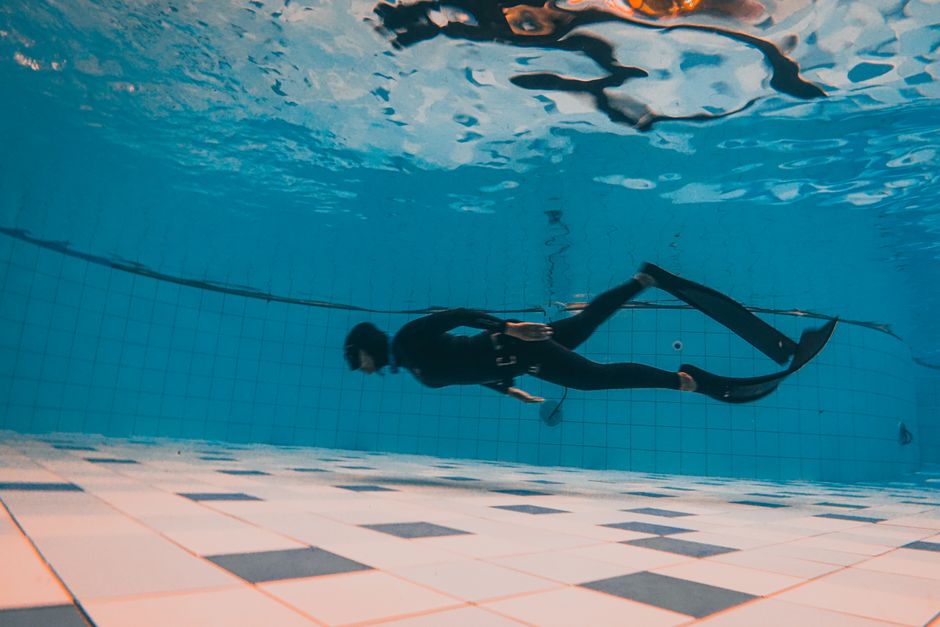
Once you have your fins, don't just jump in and kick hard for an hour. Use them purposefully.
Start with shorter drills—maybe 5 to 10 minutes at a time—to let your legs adapt to the extra work. Fins tax your muscles differently than regular swimming, and you need to build that strength gradually. As you get comfortable, you can use them for longer sets.
Mix fin training with regular swimming. Fins are a tool for specific goals (speed work, technique, strength building), not something you wear for every single lap. Most coaches recommend using fins 2 to 3 times per week as part of a balanced training plan.
Research from sports science shows that fin training improves leg strength and ankle flexibility in swimmers, especially when combined with focused technique work. The key is being intentional about when and how you use them.
Competitive swimmers training for speed should focus on short blade fins and use them during race-pace drills. This teaches your body what fast feels like.
Recreational swimmers or people working on technique benefit from either short or mid-length blades depending on comfort. The goal is to feel good in the water and build confidence, not to suffer through training.
If you're helping kids learn to swim, there are fun options designed specifically for younger swimmers, like the Mermaid One-Piece Swimming Fins For Children And Adults. These make training feel like play, which keeps kids engaged and excited about the water.
When you're ready to get started, take your time finding the right fit and style. Syndmart carries a range of swimming fins so you can find exactly what works for your needs and budget.
No, but they're genuinely helpful if you want to improve faster. Fins make training feel easier and more fun because you can move through water more efficiently. That confidence carries over to your regular swimming. Even recreational swimmers who use fins occasionally notice better technique and less fatigue.
Good quality fins last 2 to 3 years with regular training use, sometimes longer if you take care of them. Rinse them with fresh water after every session to remove chlorine and salt, and store them in a dry place. Don't leave them in direct sunlight for long periods—UV damage breaks down the material.
Fins make you move faster in the moment, but they don't permanently make you faster unless you're using them to train smarter. The speed boost comes from the added propulsion, not from magic. However, if you use fins to practice faster kick rates or improve your stroke technique, that improvement does stick with you.
Swimming fins (also called training fins) are typically shorter and stiffer, designed for fast kicks at the surface. Diving fins are often longer and more flexible, built for efficiency over long distances underwater. Both work for different purposes, but if you're training at a pool, stick with swimming fins.
Ready to shop?
Shop Now →
Swimming fins aren't just for snorkeling—they're serious training tools that boost your speed, technique, and leg strength. Here's how to find the right pair for...
Swimming Fins: Complete Guide to Choosing the Right Pair
Stability running shoes aren't just hype—they're built to prevent injury and keep your feet aligned when you run. Here's everything you need to know about...
Stability Running Shoes: What They Are & Why You Need Them
Picking the right tennis shoes can totally change how you play. We'll walk you through exactly what to look for so you stay comfortable, injury-free,...
Tennis Shoes: How to Choose the Right Pair for Your Game
Gym shoes are built for stability and floor contact, not cushioning like running shoes. Learn what features matter most and how to pick the right...
Gym Shoes Explained: How to Choose the Right Pair for Your Workout